The Best Ways to Find Where an Outfit Is From, Ranked
From asking in the comments to running a dedicated fashion search, here is how the main methods for tracking down an outfit actually compare on speed, accuracy, and effort.
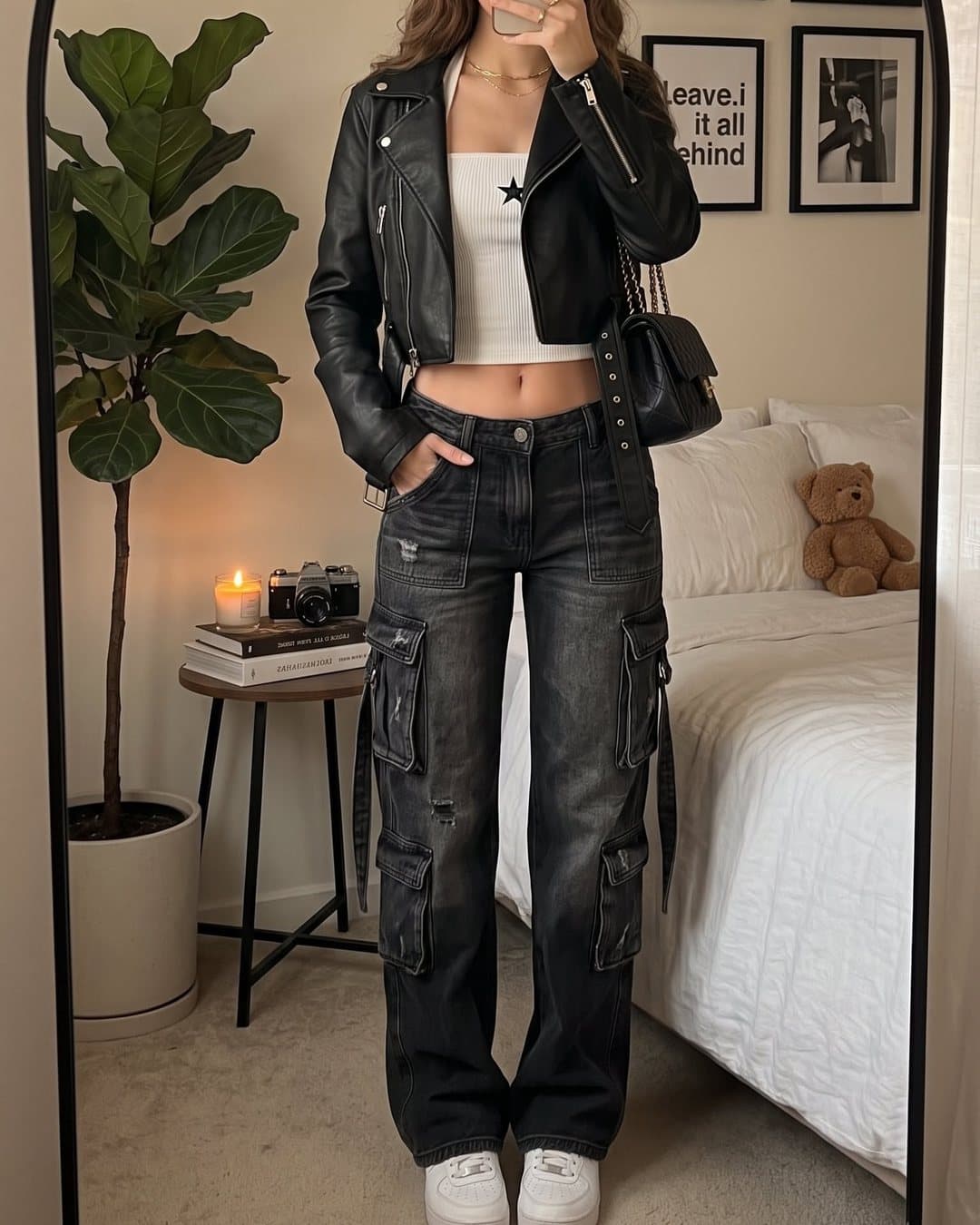
Koral is the most reliable way to find where an outfit is from when a photo is all you have, because it reads the picture as separate garments and searches each one against live retailer stock. The one thing that beats it is the poster crediting the brands themselves, which is exact but only there sometimes. Everything else is slower, less complete, or waiting on a stranger to answer.
The short version
- Read the post before you search it. A caption credit, a tagged product or a link in a bio is the only route that returns the actual brand rather than a visual match for it.
- If there is no credit, a search built for clothes is the fastest complete answer, because it separates the outfit into garments and searches each one instead of matching the photo as a whole.
- A general reverse image search is a solid free fallback for one clearly lit, obviously branded piece, and it stays the better tool if what you want is the original post.
- Asking in the comments costs nothing and works occasionally. Do it while you try something more reliable, not instead of it.
- Browsing retailers by hand only pays off when you already suspect the brand, the season, or the price bracket.
Three different questions hide inside "where is it from?"
The first is identification: this exact product, from the brand that made it, in the season it was sold. The second is substitution: something close enough that you would happily wear it, at a price you would happily pay. The third is orientation: not the piece at all, but the kind of label that makes clothes like this, so you know where to look next time.
Every method below is good at one or two of those and poor at the rest. A caption credit answers the first perfectly and the other two not at all. A community of collectors is unusually strong on the first and third for vintage pieces, and useless if you needed an answer today. A search built for clothes is aimed squarely at the second, and lands on the first often enough that it is worth trying before you go asking anyone. Most of the frustration in this hunt comes from picking a method built for one of those questions and expecting it to answer another.
Decide whether you want the item, something like the item, or the brand behind it. The ranking below changes depending on which one you meant.
What a photo can carry, and what it cannot
Prints, logos and hardware are the strongest signals in an outfit photo, because they survive compression and reposting and there is usually only one garment on the market carrying that exact pattern. Silhouette comes next, and it holds up well as long as the whole garment is inside the frame: a cropped hem or a coat cut off at the knee removes the thing that would have told a search whether those trousers are straight, tapered or wide.
Then there is everything the file simply does not contain. Fabric weight, stretch, lining, how a hem moves when someone walks, the difference between a heavy wool coat and a light one that photographs identically. Colour sits awkwardly in between: it is visible, but it is the least trustworthy signal on the page, since white balance, a filter and a screen at half brightness will all quietly shift it.
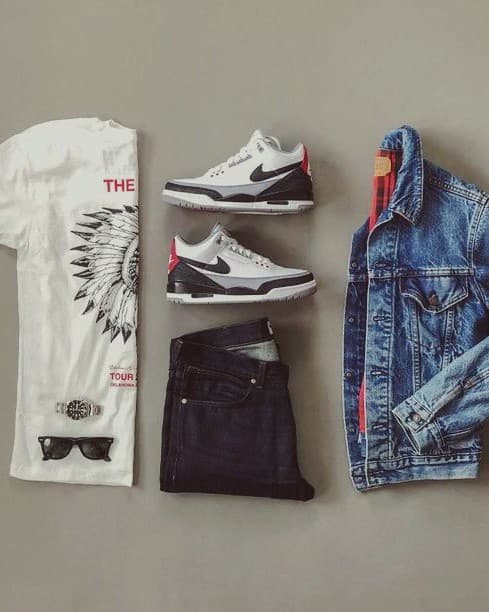
This is why a flatlay is the most searchable outfit photo there is. Every piece is separated, unoccluded and laid flat, which is exactly the state a search would have had to crop the photo into anyway.
The six methods, ranked
Ranked for the ordinary case: you have a photo, you have no idea what the brand is, and you would like to buy something today. Speed is how long it takes to get an answer, accuracy is how close that answer is to the piece in the photo, and hit rate is how often the method returns anything useful at all. The last one is where most of these separate.
- 01Best overall
A search built for clothes
Reads the photo as separate garments, so you get the outfit back rather than its loudest piece.
Koral crops out every garment it detects and searches each crop on its own, then returns them head to toe with outerwear ahead of tops because a coat is the outermost thing actually visible. That structure is the whole point. Most photos worth searching have a jacket, a top, trousers and shoes in them, and anything that matches the picture as a single object can only answer for whichever piece dominates the frame. The queries are written the way a stylist would describe the item: gendered rather than neutral, the occasion left out, material and fit carried in, and footwear given a second closer look because a shoe is a tiny fraction of a full-body shot. When the first set of results is close but wrong, you refine by typing instead of starting over. Say cheaper and the search runs again under a lower price ceiling, name a retailer you do not want and it drops out, and a colour you mentioned two messages ago stays applied.
SpeedHighAccuracyHighHit rateHigh - 02Fastest when it exists
What the poster already published
The only route that hands you the actual brand rather than a match for it.
Before you search anything, read what is already attached to the post: the caption, the tagged products, the pinned comment, the link page in the bio, sometimes a list of brands typed straight onto the image. Creators paid on affiliate links have a direct commercial interest in telling you where every piece is from, and plenty of ordinary posters do it anyway. When the credit is there it takes seconds and it is exact, brand and product name, which no visual match can promise. The problem is coverage. Reposts strip captions, screenshots strip everything, and the further an image has travelled from the account that first posted it, the less likely anything survived the journey. Credits also go stale: a link from two seasons ago often lands on a product page that no longer sells the thing, which turns this into a starting point for a search rather than an answer.
SpeedHighAccuracyHighHit rateLow - 03Best free fallback
A general reverse image search
Strong on one clear branded item, vaguer the moment an outfit is involved.
Any browser image search will happily place a single, well-lit, obviously branded piece, and it is genuinely good at finding where an image itself lives: the original post, the boards that reshared it, the article that used it. That is a different job from shopping it. Feed it a full outfit and it tends to answer for whatever is biggest or most contrasty in the frame, so a bold coat swallows the trousers and the shoes underneath it. It also has no reason to weight a garment the way a shopper would, which is why a pair of wide-leg trousers comes back as trousers of roughly the right colour in entirely the wrong cut. Expect a mixed page of retailers, resale listings, image boards and blog posts, with the sorting left to you.
SpeedHighAccuracyMediumHit rateMedium - 04Worth doing alongside something else
Asking in the comments or a DM
Free to try, but you are waiting on a stranger who owes you nothing.
Dropping a link request under the post takes a few seconds, and now and then the poster or someone who recognises the piece answers properly. The odds go up if you ask about one specific garment rather than the whole look, if the account is small enough that comments are actually read, and if the post is recent. The odds go down on a viral post where the same question already sits unanswered forty times. You control none of the timing, and an answer that arrives four days later is often too late for something that was in stock when you asked. Treat it as a lottery ticket you buy on the way past, not as the plan.
SpeedLowAccuracyMediumHit rateLow - 05Better crowd, same waiting game
A style identification community
Real expertise on vintage and niche brands, delivered on somebody else's schedule.
Posting the photo to a forum or group built for identifying clothes puts it in front of people who are often startlingly good at recognising a brand from a seam, a label font, or the year a print was in stores. For anything vintage, archival, or from a label too small to be indexed well, this beats every automated route. What you pay is time and effort: a good post needs a clear image, a note on where and roughly when you saw the piece, and enough context that answering is not a chore. Then you wait, in a queue you cannot see, for a reply that may be a confident guess rather than a certainty.
SpeedLowAccuracyHighHit rateMedium - 06Last resort
Browsing retailers by hand
Quick if you already have a suspicion, open-ended if you do not.
If you already think you know the brand, going straight to the site and filtering by category is fast and entirely reasonable. Without that starting point it becomes an unbounded hunt through category pages, hoping the piece is still stocked and still recognisable in a flat product shot that looks nothing like the photo you are working from. What makes this method work is knowledge you may not have: the brand, the season, or the price bracket. Of the six it is the slowest way to start from a photo alone, and the one most likely to end with you buying something only vaguely similar because you are tired of looking.
SpeedLowAccuracyLowHit rateLow
Why a clothes-first search reads the same photo differently
The difference is not raw matching power. It is the question being asked of the picture, and what gets thrown away before the search runs. Koral works from a garment taxonomy rather than generic object labels, so a cardigan and a coat are treated as the genuinely ambiguous pair they are, and a boot is never quietly filed as a shoe.
Queries are gendered rather than left neutral, which sounds trivial and is the single biggest source of junk in clothing search. The occasion does not survive into the search either, because "wedding guest" describes your calendar and not the garment. And footwear gets its own zoomed pass, since shoes are a small fraction of a full-body photo and lose their detail exactly where the identifying features are.
datenightboots,blackleather
The occasion goes, the department is made explicit, and footwear is sent for a second closer look rather than searched at full-body resolution.
Colour is often the least useful thing in the frame
Look at an all-black outfit and the colour tells you nothing at all. What is left is cut: where the trouser breaks, how wide the leg falls, whether the knit nips at the waist or hangs straight. That is the information a shopper actually uses, and it is the thing a general image search is least likely to weight.
Koral weights it deliberately. Bottoms are never routed to a text-only search, because straight, skinny, bootcut, wide-leg, baggy and tapered define the look far more than the shade does, and a description in words loses that first. Sunglasses are treated the same way for the same reason: they are among the hardest things to describe usefully in a sentence, so the picture has to do the work.

How the six compare
None of these costs money to try. What they cost is time, and how much of that time you spend waiting on somebody else.
| Method | What comes back | Typical wait | Works best when |
|---|---|---|---|
| A search built for clothes | Buyable listings for each garment detected in the photo | Seconds | You want the whole outfit and you intend to check out |
| The poster's own credits | The actual brand and product name | Seconds, when the credit survived | The image is still attached to the post it came from |
| A general reverse image search | Where the image lives online, plus visual lookalikes | Seconds | One clear branded item, or you want the original post |
| Comments or DMs | Sometimes an answer, more often silence | Hours to never | The poster is active and still reading replies |
| A style identification community | A considered answer from someone who knows the category | Hours to days | The piece is vintage, niche, or hard to describe |
| Browsing retailers by hand | Whatever you can find that roughly resembles it | As long as you keep scrolling | You already suspect the brand or the store |
Do this first, whichever method you pick
All six get better with the same short piece of preparation, and it costs far less time than the searching does.
- 1
Pick the frame, do not accept the one you happened to take
If the source is a video, a story, or a burst of photos, scrub to the moment where the garment faces the camera and nothing is smeared by movement. One sharp frame beats three convenient ones, and a recording paused at the wrong instant is a common reason a search comes back vague.
- 2
Crop to the one person, and the one piece, you actually mean
A search reads whatever is in the frame, not what you meant by saving it. Cut out the other people, the busy background, and the half-visible bag on the chair. Koral only reads so many garments per photo, and that is per photo rather than per person, so a group shot has to be narrowed before it can do its job.
- 3
Keep the copy closest to the original
Each repost, re-save and screen recording softens detail and shifts colour slightly. If you saved the same look twice, search the version fewest steps removed from the account that posted it first.
- 4
Write down what the photo cannot show
Fabric weight, how it moved, where you saw it worn and roughly when. None of that is in the pixels, and all of it is useful the moment you have to describe the piece in words, ask a community, or narrow a retailer hunt down to one season.
If you want two garments from the same photo and one of them is partly hidden, search the visible one first. A crop that includes half a bag and most of a jumper answers for neither of them well.
Which frame you pick decides more than which tool you use.
Where this does not work
No method here, Koral included, can produce a match for something that was never for sale in the first place. It is worth knowing the edges before you spend an evening inside them.
- Anything that was never mass produced has no exact match to find. Bespoke pieces, tailored alterations, thrifted one-offs and discontinued lines were never listed anywhere searchable, so the honest ceiling is the closest thing still for sale, not the thing itself.
- Results skew hard towards what is in stock right now. A piece from three seasons ago tends to come back as this season's nearest relative or as a resale listing, because a search can only return what a retailer is currently selling.
- Koral blocks Pinterest, Instagram and magazine roundups from its results on purpose, so if what you actually want is the original post rather than somewhere to buy, a general image search is the right tool and this is the wrong one.
- A dark, blurred or heavily filtered photo narrows every method at once. It is not that a search refuses to run, it is that the detail it would have matched on is no longer in the file, and no amount of asking politely puts it back.
What actually happens to the photo you search
- 1
Each garment is cropped out and searched on its own
Each piece cropped and matched separately, then returned head to toe with outerwear ranked ahead of tops. Nothing is reduced to a single blob for the whole outfit.
- 2
The query is written the way a stylist would describe it
Queries are gendered rather than neutral, occasion words like wedding or date night do not survive into the search, and texture, material and era are carried through as attributes of the garment.
- 3
Footwear gets a second, zoomed pass
Shoes occupy a tiny fraction of a full-body photo, so a dedicated zoomed look names the closest well-known model rather than settling for the colour and the category.
- 4
Results are filtered before you ever see them
A retailer selling the piece itself, a Zara, an H&M, a John Lewis, an Adidas, ranks ahead of resale, and Depop, Vinted and eBay surface only when resale is genuinely a real share of what exists. The replica marketplaces are blocked outright, as are Pinterest and Instagram, so the platform the photo came from never comes back as the answer. Currency and retailer domains follow the region you are searching from.
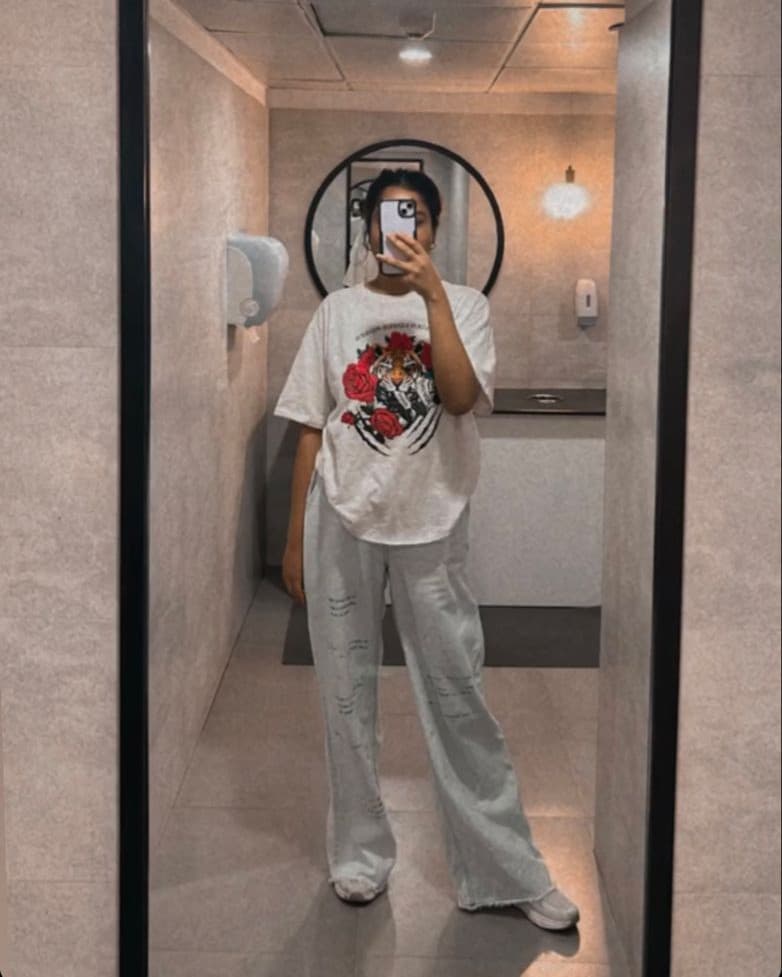
- 01Printed teeA print is the easiest signal in the frame. It survives compression and reposting better than colour does.
- 02Wide-leg jeansBottoms are judged on cut before colour, since the silhouette defines the look more than the wash.
- 03SneakersToo small at full-body resolution to match reliably, so footwear gets a zoomed pass of its own.
Frequently asked questions
Related guides
Stop asking and just search the photo.
Drop in the screenshot you are trying to place and let Koral split it into separate garments, match each one against retailers that actually stock it, and keep narrowing the results while you type.
Start a search